
Most playdate advice optimises for fun: high energy, group cooperation, lots of activity. Some playdates need to do the opposite. After a long school day, after a busy weekend event, in the middle of a developmental rough patch, your kid may need the playdate to be a calm-down session, not a wind-up one. Here are the 12 sensory activities that genuinely regulate an over-stimulated nervous system, the difference between sensory-seeking and sensory-avoiding kids, and how to set up a low-stimulation playdate that helps both kids reset.
Why some playdates need to be calm-down playdates
Most kids' nervous systems handle stimulation, recover during rest, and rebalance overnight. Some kids do not have that easy reset. They build up stimulation across the day, into the week, into stretches of months when life is full or transitions are happening, and they need active down-regulation, not more input.
Common situations that call for a calm-down playdate.
- Friday after a full school week. The school week is socially exhausting; weekend social input on top of that produces meltdowns by Sunday afternoon.
- After a big event. A birthday party, a family gathering, a school trip. The next day's playdate should regulate, not stimulate.
- During a transition. New school, new sibling, parent travel, family illness. Kids in transitional stress need calm input, not more change.
- When the kid is sensory-sensitive by temperament. Some kids are wired to need more downtime than others. Their playdate menu looks different.
- When the kid is in a developmental rough patch. Sleep regression, behavioural shift, regression around an issue. Calm playdates help the nervous system catch up.
If you are still building out the broader playdate playbook, our complete guide to playdates covers the bigger picture. This piece is the calming-sensory layer.
Sensory-seeking vs. sensory-avoiding (different needs, different solutions)
Two patterns of sensory regulation needs show up in kids, and they call for different playdate setups.
Sensory-seeking kids.
Crave intense input. Squeeze hard, run fast, jump high, want strong-tasting food, hum and click and tap. Their nervous system is under-registering input and needs more to feel regulated. Counter-intuitively, these kids often do well with high-input activities (the trampoline, the obstacle course, the messy sensory bin) which let them get the input their body is asking for.
Sensory-avoiding kids.
Get easily overwhelmed by input. Loud sounds, bright lights, scratchy clothes, strong smells, crowded rooms, sudden changes. Their nervous system is over-registering and needs less input. These kids do well with low-input calming activities (quiet space, dim light, predictable structure, deep-pressure activities).
Some kids are both.
Sensory-seeking for some senses, sensory-avoiding for others. Loves deep pressure (seeking), hates loud sounds (avoiding). Common in autism spectrum and ADHD profiles; also common in neurotypical kids who happen to have sensory preferences.
The Child Mind Institute primer on sensory processing is the best parent-readable explanation of the sensory-seeking vs. sensory-avoiding distinction. The activities in the next sections work for both patterns; the trick is matching the activity to the kid's profile.
The 5 calming sensory inputs (the building blocks)
Five categories of sensory input have research-backed calming effects on most kids' nervous systems. Knowing the categories helps you design a playdate that meets the kid where they are.
- Deep pressure. Weighted blankets, big hugs, squeezing in a beanbag, rolling under a heavy cushion. Deep pressure stimulates the proprioceptive system, which regulates the body's sense of where it is and produces a calming response.
- Slow rhythmic motion. Swinging slowly, rocking in a chair, slow walking. Vestibular input that calms (in contrast to fast spinning or bouncing, which stimulates).
- Water play. Pouring, swirling, soft splashing. Water on the skin and the rhythm of pouring both regulate. Different from fast water-table play; this is the slow contemplative version.
- Heavy work. Pushing, pulling, carrying. Stacking heavy books on a shelf. Pushing a laundry basket across the floor. Carrying groceries in. These produce proprioceptive input (the same calming system as deep pressure) through purposeful effort.
- Quiet repetitive sensory. Stringing beads, sorting sticks, smoothing dough, brushing a soft surface. Low-stim, focused, calming.
All five appear in the activities below; you can mix and match. A 90-minute calm-sensory playdate often includes 2-3 of the 5 inputs, with quiet stretches between.
12 calming sensory activities by age
Toddlers and preschoolers (ages 2 to 5).
- Water table or pouring station. A basin with cups and a few small containers. Pour, swirl, transfer. 30-45 minutes of calm absorption.
- Play dough or kinetic sand. Squeeze, roll, shape. Quiet repetitive sensory plus mild deep pressure.
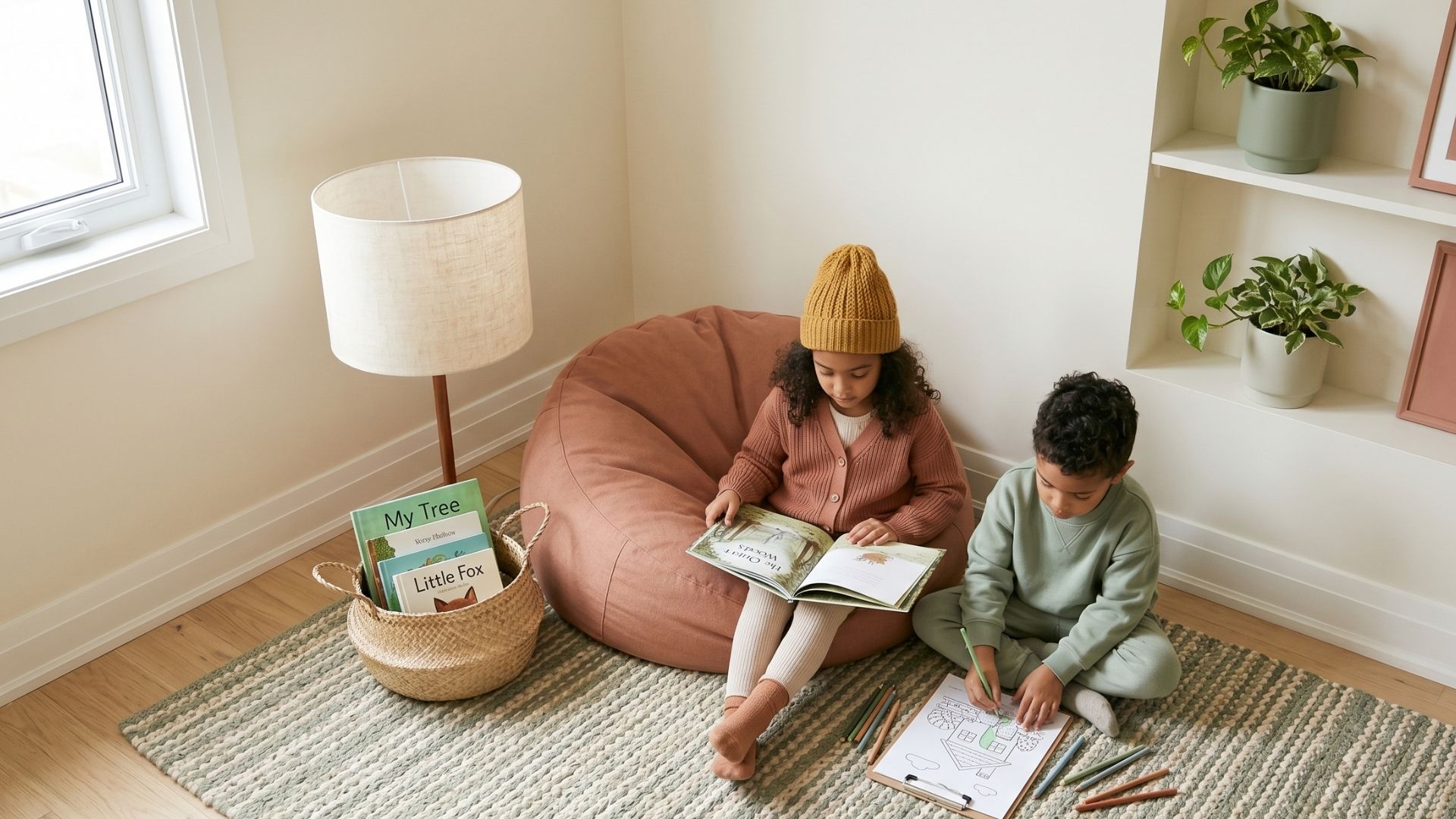
- Reading aloud in a quiet corner. The kid (or two kids) on a beanbag, you reading slowly. Picture books, predictable rhythm, soft voice.
- Soft lap sit with a stuffed animal. Especially after a hard moment; deep pressure plus quiet.
School-age (ages 6 to 9).
- Building elaborate things slowly. LEGO construction without a goal. Magnatile architecture. Block towers that get knocked down and rebuilt.
- Drawing with focus. Mandala colouring books, detailed sketching, watercolour. Slow, focused, quiet.
- Cooking together. Baking cookies, making pizza, simple recipes. Heavy work (kneading, stirring) plus the focus of following steps.
- Bead stringing or jewellery making. Quiet, repetitive, satisfying. Friendship bracelets work especially well.
Tweens (ages 10 to 12).
- Slow yoga or stretching together. A 20-minute yoga video aimed at kids. Combines deep input, rhythmic movement, breathing.
- Journaling or sketching together at a table. Both kids working alongside each other on personal projects.
- Slime making, candle making, soap making. Sensory crafts with focus and fine motor.
- Listening to an audiobook together while doing something quiet (puzzle, sketch, build). Combines input modalities at low intensity.
Pick 2 to 3 for a 90-minute playdate. Avoid mixing high-stim and low-stim activities in the same session; the high-stim part will undo the calming work.
Setting up a low-stimulation playdate space
The space matters as much as the activity. A calming activity in a chaotic visual environment does less than a calming activity in a quiet visual environment.
Five space adjustments that lower the sensory load.
- Tidy the visible clutter. Hide bins, fold blankets, clear the floor. Visual chaos is sensory chaos for sensory-sensitive kids.
- Lower the lighting. Soft lamps instead of overhead lights. Closed curtains on a sunny day. Even slightly dimmer light reduces the visual processing load.
- Remove background noise. No TV in the next room. No music or only soft background music. The hum of a dishwasher or washing machine: turn it off.
- Create a defined zone. A corner of the room with a rug, two cushions, and the activity laid out. Defined space reduces the kid's need to scan.
- Have a quiet escape available. A corner with a soft chair, a basket of books, a soft light. A kid who gets overwhelmed mid-playdate can retreat without ending the playdate.
If you are setting up the play space more broadly with sensory in mind, our guide to setting up a play space kids actually use covers the design framework. The quiet-corner section pairs with this article.
Length and pacing for sensory-sensitive kids
Sensory-sensitive kids do better with shorter, calmer playdates than the typical schedule suggests. Two adjustments that matter.
Shorter total length.
60 to 90 minutes is the right window for most sensory-sensitive kids, even at school-age. The 2-hour playdate that works for many kids is too long for an over-registering nervous system; the second hour is where dysregulation builds up.
Built-in transition windows.
Between activities, build in a 5-10 minute reset. Snack at the table. Quiet sit on the rug. The reset is part of the regulation; do not skip it to fit more activities in.
Predictable shape.
Tell the kid what will happen before the playdate. "Maya is coming over at 3, we will do art for half an hour, snack, read for half an hour, she goes home at 4:30." The predictability removes one source of unease.
Calm pickup.
Five-minute warning before pickup. Calm transition language. Do not let the playdate end with the kid being yanked out of an activity at full speed; the abrupt end can undo the playdate's calming work and produce a meltdown after pickup.
When sensory-friendly playdates matter most
Three windows where calm sensory playdates do their highest-impact work.
After-school.
School is sensory-loaded for most kids; for sensory-sensitive kids it is exhausting. The post-school playdate should regulate, not add more input. Quiet activity in a low-stim space, 60 minutes max, snack at the start, calm pickup. If you cannot make the after-school playdate calm, push it to weekend mornings instead.
Post-event.
After a birthday party, a school trip, a family wedding, a weekend of grandparent visits. The next day's playdate (or the same evening's) should be quiet. Resist the temptation to schedule a follow-up activity right after a big event; the kid's system needs recovery time.
During life transitions.
Moving house, starting school, a new sibling, a parent's work change. Transition stress is invisible but real; calm playdates during transition periods help the kid's nervous system catch up. Every other playdate during a transition can be calm; not every single one needs to be.
If your kid is showing persistent dysregulation across many situations (not just playdates), it may be worth looking at the bigger pattern. Our guide to helping a shy child enjoy playdates covers temperament-based sensitivity; for more clinical sensory profiles, the Child Mind Institute resources above are the right starting point.
Working with the visiting kid's sensory needs
If your kid is fine and the visiting kid has sensory needs, a few adjustments make the playdate work for both.
Ask the parent ahead of time.
A simple text: "Anything we should know about Maya for the playdate? Any sensory things, food things, or other tips?" Most parents of sensory-sensitive kids are direct about their kid's needs; asking opens the door.
Adjust the environment to the visiting kid's threshold, not your kid's.
Lower the lights, turn off the TV, tidy the visible clutter. Your kid will not notice; the visiting kid will.
Plan a quieter activity menu.
Skip the floor-is-lava. Default to art, building, books, snack, gentle outside time. The visiting kid is more likely to enjoy themselves; your kid does not lose anything.
Have a bailout plan.
If the visiting kid gets overwhelmed despite the setup, have the quiet corner ready. Tell the parent at drop-off where it is so the kid can be guided there if needed. "There is a soft corner with books and a beanbag if she needs a moment."
Most parents of sensory-sensitive kids deeply appreciate hosts who think about this. The playdate becomes a real social win for the kid, and a real friendship win for both families.
Frequently asked questions
How do I tell if my kid needs a calm playdate vs. a high-energy one?
Read the day. Long school week, recent big event, hard morning, transition period: lean calm. Restful weekend, well-slept kid, no recent disruptions: lean active. When in doubt, calm; an over-stimulated kid produces a meltdown that lasts hours, while an under-stimulated kid will tell you they are bored within 20 minutes and you can pivot.
What about screens as a calming tool?
Mixed. A quiet show together can be calming for some kids; for others, screen content (especially fast-cut, brightly-coloured, music-heavy) is itself dysregulating. Watch your kid after screen time. If they come away calm, screens worked for them today. If they come away wired, the screen was the wrong choice. Audio-only options (audiobooks, music, podcasts) are reliably more calming than visual screens.
How long should a calm sensory playdate last?
60 to 90 minutes for most sensory-sensitive kids. 45 to 60 minutes if the kid is already over-stimulated when the playdate starts. The end-while-it-is-still-going rule applies even more strongly here than with typical playdates; the second hour is where dysregulation builds up.
Are weighted blankets safe for playdate use?
For older kids (5+) under supervision, generally yes. Avoid for kids under 2; consult your pediatrician for kids 2-5. Weighted blankets should be roughly 10% of the kid's body weight, not heavier. Use during quiet activities (reading, watching a show), not during sleep or during active play. Many sensory-sensitive kids find them genuinely regulating.
How do I host a kid with diagnosed sensory processing differences (autism spectrum, ADHD, sensory processing disorder)?
Ask the parent specifically what works and what does not. Most have a clear sense after years of experience. Common adjustments: shorter playdate (60 minutes), one-on-one not group, no surprises in the activity (preview the schedule with the kid at start), defined quiet escape, no overwhelming sensory inputs (loud music, strong smells, crowded play area). The visiting parent is your best resource; do not guess.
When should I talk to a pediatrician about sensory needs?
If sensory sensitivity is interfering with daily life: refusing many foods, struggling with clothes, melting down at noise levels other kids tolerate, avoiding social situations because of sensory overwhelm, sleep difficulties tied to sensory issues. The Child Mind Institute resources linked above are the right pre-read; the pediatrician conversation is the right next step. Occupational therapy is the most common intervention and is often dramatically helpful.