
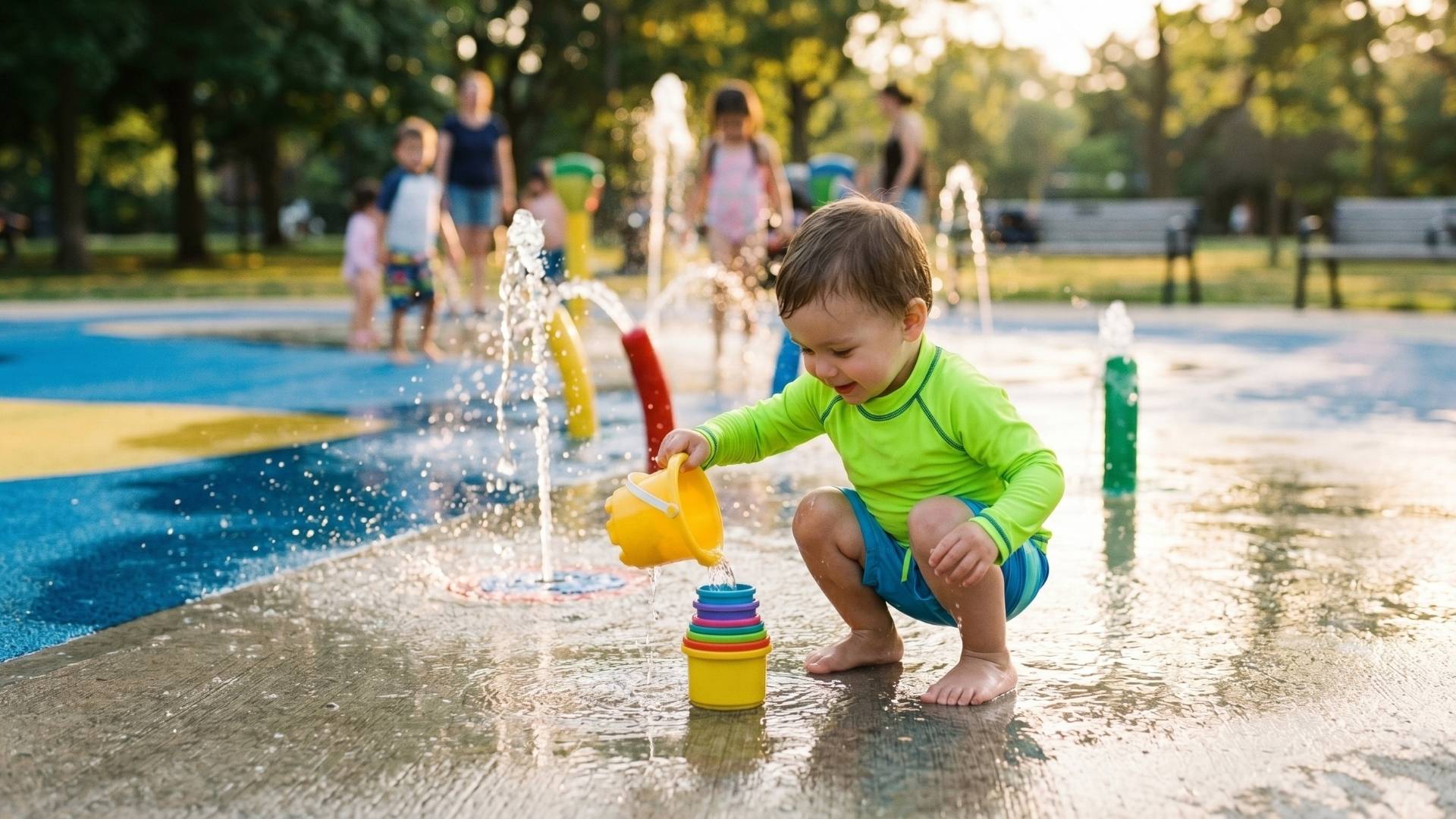
A splash pad packing list breaks into five categories: sun protection, swimwear and cover-ups, water shoes and a dry-clothes kit, a hygiene kit (wipes, sanitizer, wet bag), and a light snack and water plan. The whole bag should fit on one shoulder. Pack as if you might leave in 45 minutes, because most splash pad visits are exactly that. The rest of this guide is the master list.
Before you read on (a short note)
Splash pads are the easiest water outing on the family calendar: close to the car, low-commitment, often free, and good for short visits between other things. This guide is the deep packing list. For the cross-destination comparison see family water day packing. For the explainer on how splash pads actually work, see what is a splash pad. For water safety see our family water safety guide.
The five-category answer (the bag almost fills itself)
Splash pads reward light packing. Pack by category and skip the temptation to over-fill.
- Sun protection: sunscreen, sunscreen stick, sun hats, sunglasses, lip balm with SPF.
- Swimwear and cover-ups: swimsuit, rash guard, robe towel or cover-up for the walk to the car.
- Water shoes and a dry-clothes kit: water shoes with grip, dry shirt + shorts + dry underwear per kid, light hoodie.
- Hygiene kit: hand sanitizer, wipes, dual-compartment wet bag, small first-aid kit.
- Snack and water plan: insulated water bottle per family member, light snacks, optional small picnic for longer visits.
"Pack as if you might leave in 45 minutes."
Most splash pad visits run 60 to 90 minutes. Plan light, then stay longer if the kids are happy.
Before you leave the house: what kids should already be wearing
The smoothest splash pad visit starts at home, not in the parking lot. Get kids in swimwear before you load the car. Arrival becomes "shoes off, sunscreen check, go play" instead of a 15-minute changing-room session.
What goes on at home
- Sunscreen, first coat, applied to dry skin. Reapply on arrival and every 90 minutes after.
- Bright swimsuit or quick-dry shorts and a rash guard. Bright color helps you spot the kid in a crowded splash pad.
- Long-sleeve UPF rash guard or swim shirt for fair-skinned kids and longer visits. Cuts the reapplication workload.
- Wide-brimmed sun hat with a chin strap. Splash pads often have minimal shade.
- Water shoes already on. Splash pad concrete gets dangerously hot in summer and slippery the rest of the time.
- A light cover-up or hooded towel-poncho for the walk to the car at the end of the visit.
Pro tip: apply sunscreen at home, before the visit
Apply the first sunscreen coat in your bathroom. The kid is dry, calm, you have control, and sunscreen does not stick to wet or sandy skin once you arrive. Use mineral sunscreen with zinc oxide or titanium dioxide, SPF 30 or higher, water-resistant. Reapply every 90 minutes at the splash pad, even on cloudy days. The single most under-used parent move.
The non-negotiables: every splash pad bag needs these
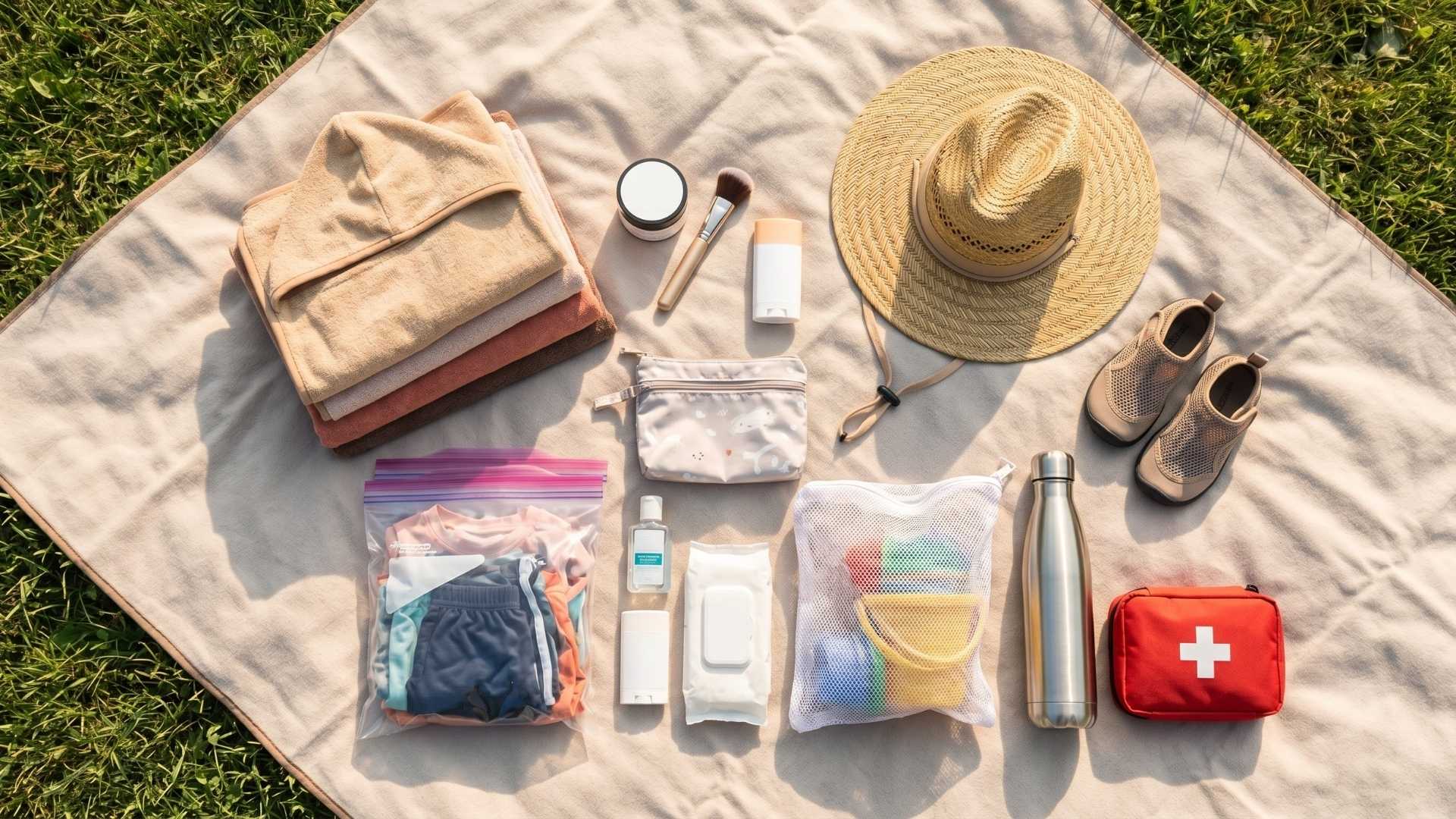
These items are the bag. Every visit, every age, every season warm enough for a splash pad.
Sun protection
- Broad-spectrum mineral sunscreen, SPF 30 or higher, water-resistant. Zinc oxide or titanium dioxide.
- Sunscreen stick. For faces, ears, the back of the neck, and the part in the hair.
- A clean makeup foundation brush. The single best tool for applying sunscreen on small, squirming faces.
- Lip balm with SPF.
- Wide-brimmed sun hat per kid, with chin strap for younger ones. Backup hat for toddlers who throw them.
- Polarized sunglasses for kids who will wear them, with a strap.
- Clip-on shade for the stroller if you brought one.
- A small pop-up shade or umbrella for splash pads with no trees (optional for longer visits).
Pro tip: the foundation brush sunscreen trick
Keep a clean makeup foundation brush in the splash pad bag year-round. For kids who fight the hand-rub-on, dab a small amount of mineral sunscreen onto the brush and apply to the face like blush. The soft brush feels nothing like a parent's sticky hands. Kids who normally scream through sunscreen application will sit through this calmly. Replace the brush once a season.
Swimwear, cover-ups, and dry clothes
- Swimsuit per kid in a bright color. Some kids prefer quick-dry shorts and a rash guard instead.
- Backup swimsuit for toddlers (potty surprises happen).
- Rash guard or UPF swim shirt for fair-skinned kids and longer visits.
- Swimsuit cover-up or robe towel for the walk between water and the car.
- Hooded towel for toddlers. Warms them quickly and stays on better than a flat towel.
- Complete dry outfit per kid: shirt, shorts, dry underwear, optional light hoodie.
- Dry underwear. The most-forgotten item. Sitting in damp swim shorts on the drive home is miserable.
- Swim diapers if needed. Regular diaper for after.
Water shoes (do not skip these)
- Water shoes with grip per kid. Splash pad concrete gets dangerously hot in summer and slippery anytime.
- Look for closed-toe or sandal-style with secure heel straps. Flip-flops slip off and trip up little feet.
- Backup pair for the ride home if the splash pad shoes get soaked beyond drying.
- For toddlers, water shoes also protect from broken nozzle screws or sharp edges on rare poorly-maintained pads.
For full water-shoe selection and fit guidance, see water shoes for kids.
Towels and the wet bag
- One towel per kid plus one spare. Compact microfiber works well (pack down to the size of a water bottle).
- Hooded towel or hooded towel-poncho for toddlers.
- Dual-compartment wet bag. Dry clothes on one side, soaked swimsuit and towel on the other.
- A separate small bag for soiled or wet items.
- Trash bag.
Hygiene kit (the splash-pad-specific essentials)
- Hand sanitizer. Splash pad buttons and nozzles are touched by hundreds of kids a day.
- Heavy-duty wipes. For cleaning hands before snacks, sticky-fruit cleanups, and surprise diaper situations.
- Small roll of toilet paper if you suspect park bathrooms might be poorly stocked.
- A small first-aid kit: waterproof bandages, antiseptic wipes, tweezers, any daily medication, allergy medication.
Parent essentials
- Phone in a small waterproof pouch (less critical at a splash pad than the beach, but useful).
- Keys, wallet, ID, payment card, a little cash.
- A folding lawn chair or low picnic chair for a longer visit. Park benches fill up fast.
- A book or earbuds if another adult is watching the kids.
- A dry shirt for yourself if you have a toddler running back for hugs.
Splash pad toys (with rules)
Splash pads already provide most of the play. Bring fewer toys, and choose simple over complicated. Check posted rules first: many splash pads ban water shooters, balloons, balls, or anything that can block drains.
Toys that work
- A simple bucket. Pouring, filling, dumping, pretend cooking. One bucket carries a whole visit.
- Stacking cups. One of the best splash pad toys for toddlers: cheap, light, endlessly useful for scooping and stacking.
- Small plastic boats or rubber ducks for shallow streams and fountain features.
- Reusable water balloons (if allowed). Set rules first: no faces, no babies, no strangers, no hard throws.
- Small foam water shooters (if allowed). Used away from babies and other people's kids.
- Empty plastic measuring cups, ramekins, funnels, watering cans from the dollar store. Cheaper and more interesting than fancy splash-pad-specific toys.
- Bubbles for younger kids during shade breaks, used away from wet slippery areas.
Toys to skip
- Toys with many small parts (get lost or block drains).
- Hard balls and high-velocity toys near babies, toddlers, or crowds.
- Large water guns with strong pressure (often banned and create conflict).
- Battery-powered noise toys.
- Anything expensive or breakable.
- Slippery soaps, bath oils, or bubble bath (not allowed at any splash pad).
Simple toy rules to set before kids start playing
- Do not throw water balloons at heads.
- Toys stay away from drains and inlet nozzles.
- If a toy causes fighting, it goes back in the bag for the rest of the visit.
- When it is snack time, toys go in the mesh bag.
- If another kid asks to play with our toy, we share or we put it away.
Put all toys in a mesh laundry bag. At the end of the visit, the bag drains itself and you do not bring a puddle to the car.
Snacks and drinks (light, easy, hygiene-conscious)
Splash pad visits are short, so the food plan is light. The main concerns are heat (kids overheat fast), hydration, and germs (splash pad surfaces are touched by hundreds of kids, so hands get sanitized before snacks).
Water and drinks
- Insulated stainless-steel water bottle per family member, packed with ice.
- A second bottle of water in the car for refills.
- Frozen juice pouches or a few frozen grapes for kids who like a slushy treat by midday.
- Coffee for parents (in a secure travel mug).
Snacks that work at splash pads
- Grapes (sliced for under-4s), cheese sticks in a cooler bag, yogurt pouches.
- Crackers or rice cakes in snap-top containers.
- Pre-cut watermelon, cucumber, berries in hard-shell containers.
- Pretzels, granola bars, dry cereal cups.
- Bagels, sandwiches, or wraps if you plan to stay through lunch.
What to skip as snacks
- Chocolate, sticky bars, popsicles outside a small cooler (melt fast in sun).
- Open chips and dry crackers in shallow bowls (wind and ants).
- Anything with raw mayo or egg in a soft cooler.
- Foods that need utensils for under-5s.
The hygiene-before-snacks rule
Splash pad water-feature buttons, nozzles, and dumping buckets are touched by every kid who has ever visited. Hands get sanitized or wiped before snacks. Establish this as the rule before play starts and it becomes habit.
Splash-pad hygiene rules that matter
Splash pads are public water-play spaces. They are usually safe; a few small habits make them safer. The CDC healthy swimming guidance covers the main concerns; Cryptosporidium, E. coli, and Giardia have all been traced to splash-pad outbreaks.
What to teach kids before play starts
- Do not drink or swallow the splash pad water. Say it out loud before they start; repeat for toddlers.
- Do not put face directly under high-pressure nozzles.
- Take a bathroom break before play and at least once an hour.
- Tell a parent immediately if a diaper has leaked.
What parents handle
- Change swim diapers in the bathroom or at the car, not at the splash area.
- Wash or sanitize hands before snacks.
- If your child has had diarrhea recently, wait two weeks after symptoms stop before visiting a splash pad (CDC guidance; Cryptosporidium can shed in stool for up to two weeks after diarrhea resolves).
- Keep open wounds covered with waterproof bandages.
- Rinse off at home after the visit. Wash swimsuits and towels right away.
- Dry any reusable water toys fully before storing.
Bathroom-shoe etiquette
Most splash pad bathrooms are public-park bathrooms: wet floors, busy traffic, sometimes poorly stocked. Two small habits: do not let kids walk into the bathroom barefoot, and do not let them wear the water shoes they just had in the splash pad into the bathroom either. Keep a cheap pair of slide-on shoes in the bag for bathroom runs only.
Splash pad safety (active supervision still applies)
Splash pads feel safer than pools because the water is shallow, and they are. The real risks are slips on wet concrete, kids running into each other, getting separated in a crowd, and overheating. For the full water-safety primer, see our family water safety guide.
The five non-negotiables
- Stay close to babies and toddlers. The water is shallow but the surface is hard.
- Use water shoes with grip. Concrete gets slippery and dangerously hot.
- Pick a home base before play starts: bench, stroller, blanket, picnic table, lawn chair. Tell kids this is where the family meets.
- Run a water-watcher system if you are with another adult. Hand off the role visibly. Phone away when on duty.
- Leave during thunder or lightning. Most splash pads automatically shut off in bad weather; some do not. Adult call.
Lost-kid plan for a busy splash pad
- Take a photo of each kid at the start showing exactly what they are wearing.
- Pick a clear meeting landmark together (the gazebo, the blue trash bin, the snack stand).
- Tell kids to find a parent or another mom with kids if they cannot see you.
- Bright swimwear helps. Skip blue and white; pick neon orange, pink, or yellow.
Heat safety
- Take shade breaks every 20 to 30 minutes.
- Reapply sunscreen every 90 minutes from arrival.
- Offer water often. Splash pad activity dehydrates kids faster than the cool water makes it feel like.
- Watch for the signs of overheating: bright red face, slowing down, complaining of headache, unusually grumpy. Move to shade, water, and a cool damp washcloth.
Baby and toddler add-ons (the gear that gets you through the first 90 minutes)
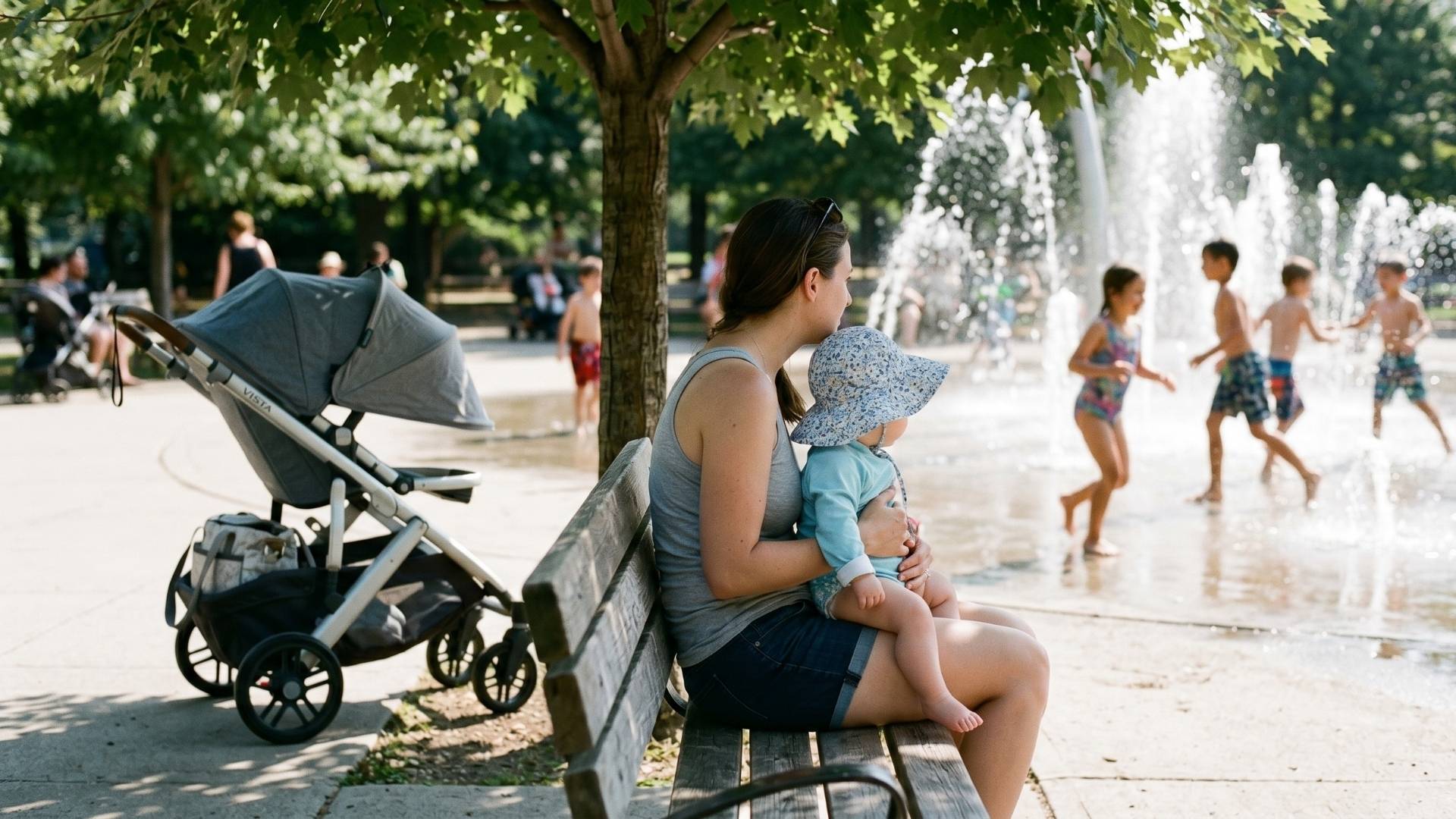
Splash pads are toddler central. Babies are welcome but need extra planning. For the full age-specific lists see water day packing for a toddler and water day packing for a baby.
Babies (under 1)
- Swim diapers AND regular diapers. More than you think.
- Waterproof changing pad.
- Wipes (plus extra wipes).
- Baby-safe sun hat with a brim.
- Lightweight long-sleeve UPF cover-up.
- For under-6-months, the AAP advises shade and clothing first, with a small amount of mineral sunscreen on small exposed areas only if needed; ask your pediatrician.
- Shade: clip-on stroller shade, a small umbrella, or the shady side of a tree.
- Feeding supplies: bottles, formula in a sealed cooler bag, breastfeeding cover.
- Stroller fan, used safely.
- A small lightweight blanket.
Most splash-pad features are too intense for babies under 1. Set up the stroller in shade near the edge, splash with cupped hands or a small container, and let them watch. Plan for 45 minutes maximum.
Toddlers (1 to 3)
- Swim diapers + regular diapers (spares of both).
- Hooded towel (warms them faster, doubles as cover-up).
- Bright neon swimsuit.
- Water shoes that stay on when they run.
- Backup outfit beyond the dry-clothes kit (toddlers are creative).
- Snacks every 90 minutes.
- A comfort item if they have one.
- A small bucket or stacking cups (toddler splash-pad MVPs).
Pro tip: pack each kid's outfit in a labeled zip bag
One zip bag per kid containing shirt, shorts, dry underwear, and a fresh swim diaper if needed. After changing, the wet swimsuit goes back into the same bag. Saves the bottom of the splash-pad bag from becoming a damp pile and prevents the swap-mix-up where the 2-year-old ends up wearing the 5-year-old's shorts.
Preschool and school-age (4 to 9)
- Less gear overall; they handle more themselves.
- Rash guard or quick-dry shirt.
- Goggles if they want them (some kids hate water in their eyes; goggles fix it).
- A small toy they choose themselves.
- Their own water bottle (they take ownership).
- The rule about staying where you can see them.
The splash-pad car stash (smaller than the beach version)
Splash pads do not need the full permanent-trunk-bin treatment that the beach demands. A scaled-down kit covers the ride home.
What to keep in the car all summer
- Two dry towels (never go on the splash pad).
- A full change of clothes per kid, including dry underwear.
- A dry shirt and shorts for each parent.
- Cheap flip-flops or slip-ons for the ride home.
- A plastic laundry basket or large bin for wet/damp gear.
- A roll of paper towels and a trash bag.
- A package of wipes.
- Hand sanitizer.
- A small bottle of water for foot rinses or quick clean-ups.
- A box of granola bars or shelf-stable snacks (the special "car snack").
- Backup diapers and swim diapers if you have a baby or toddler.
- Sunscreen stick (the bag one will get hot).
The two-minute return-to-car routine
- Towel-dry the kids and brush off as much grass or wood-chip debris as you can.
- Open the trunk or back door for a privacy screen.
- Stand the kid on the small mat or a folded towel.
- Quick wipe or rinse with the water bottle.
- Dry clothes on, including dry underwear.
- Buckle everyone in. Hand out the car snack.
Most splash-pad visits are short enough that kids can ride home in a damp swimsuit and a cover-up with a towel under them. Full change is optional unless the kid is cold or genuinely soaked.
Pro hacks and "aha" moments most packing lists never mention
The small tricks that change the dynamic of a splash pad visit. None essential; together they make the difference between a chaotic afternoon and a smooth one.
Before you leave home
- Pre-apply sunscreen on small kids while they are still calm.
- Pack each kid's full outfit in a labeled zip bag.
- Top up the water bottles with ice.
- Charge your phone.
- Keep a year-round splash-pad bag stocked with the non-perishables: sunscreen, hats, wipes, hand sanitizer, the cornstarch sock from the beach bin if you cross-use it, the foundation brush, water shoes. Next visit, just add the food and dry clothes.
When you arrive
- Take a photo of each child showing what they are wearing.
- Point at the meeting spot together and say the rule out loud.
- Apply or reapply sunscreen before kids run off.
- Set up the home base (bench, stroller, blanket) and clip the bag to it so nothing walks off.
- Name the water-watcher if you are with another adult.
During the visit
- Use the foundation brush for face-sunscreen reapplications.
- Keep the sunscreen in a cooler pocket or shaded bag (heat separates mineral sunscreen).
- A clip or carabiner on the stroller holds the wet bag, the mesh toy bag, and the kids' hats.
- A bright ribbon, scarf, or balloon tied to the stroller helps kids spot your spot.
- Hand sanitizer before every snack.
- Bug spray wipes for late-afternoon visits (mosquitoes love grass and standing water).
[tip title="Pro tip: the "leaving snack" technique"]Save one specific snack in the cooler that you do not bring out during the visit. Announce it as you start packing up: "Special snack in the car when shoes are on." The transition from water to going home becomes a treat instead of a fight. Works for ages 2 through 8 reliably. For older kids, the equivalent is a stop at a specific snack spot on the way home. For the full leaving-without-meltdown approach, see how to leave a water outing without a meltdown.[/tip]
Hidden-valuables shortcuts
- Roll keys and a small wallet into a clean disposable diaper, fold like a used one, leave on the towel. No one steals what looks like a soiled diaper.
- Or use a waterproof phone pouch on a lanyard for keys + card + ID.
- Or hide a small pouch under the picnic blanket where you are sitting.
Hooded-towel-poncho trick
For toddlers and small kids: a hooded towel-poncho replaces both a towel AND a cover-up. They walk into the splash pad wearing it. They sit on it during snack time. They wear it home over the swimsuit. One item, three uses, less bag.
What to skip (the overpacking trap)
Splash pads tempt parents to bring full beach kits and then drag them across a public park. Bring less; the visit is shorter than you think.
- Heavy coolers. A soft insulated bag for a 90-minute visit is plenty.
- Large umbrellas and shade tents. Many splash pads are in public parks with at least some shade. If your splash pad has none, a small clip-on shade is enough.
- Beach chairs (unless you are settling in for a 3-hour visit). A lightweight folding lawn chair is the goldilocks if you bring seating at all.
- Glass containers (banned in most public parks).
- Expensive jewelry, watches, or electronics without protection.
- Toys with many small parts (lost in 15 minutes, possible drain block).
- Large water guns with strong pressure (often banned).
- Hard balls and high-velocity toys near other people's kids.
- Bluetooth speakers played loud. Public park, not your backyard.
- Slippery soaps, bath oils, or bubble bath in the water features.
- Anything you cannot carry on one shoulder while holding a child's hand.
If you cannot answer "what specific problem does this prevent," leave it home.
The complete master checklist (print or screenshot)
Use this as your final no-thinking-needed list. Categories match the five-category answer at the top.
Sun protection
- Mineral sunscreen, SPF 30+, water-resistant
- Sunscreen stick for faces
- Foundation brush for application
- Lip balm with SPF
- Sun hat per kid with chin strap
- Backup hat for toddlers
- Polarized sunglasses with strap (optional)
- Small clip-on shade (if your splash pad has no trees)
Swimwear and dry clothes
- Bright swimsuit per kid
- Backup swimsuit for toddlers
- Rash guard or UPF swim shirt
- Cover-up or robe towel for the walk
- Hooded towel-poncho for toddlers
- Complete dry outfit per kid INCLUDING dry underwear
- Light hoodie
- Swim diapers (with spares)
Water shoes
- Water shoes with grip per kid
- Cheap slide-on shoes for bathroom trips
- Backup water shoes for the ride home (optional)
Towels and wet bag
- One towel per kid + 1 spare (compact microfiber works well)
- Hooded towel for toddlers
- Dual-compartment wet bag
- Small bag for soiled items
- Trash bag
Hygiene kit
- Hand sanitizer
- Heavy-duty wipes
- Small roll of toilet paper (just in case)
- First-aid kit: waterproof bandages, antiseptic wipes, tweezers, daily medication, allergy medication
Snacks and water
- Insulated water bottle per family member
- Backup bottle of water in the car
- Cooler bag with ice packs
- Light snacks (grapes, cheese sticks, yogurt pouches, crackers, fruit)
- Frozen juice pouches or frozen grapes for treats
- Sandwiches or wraps for longer visits
- Coffee for parents
Toys (less is more)
- Bucket
- Stacking cups
- Mesh laundry bag to corral toys
- Small plastic boats or rubber ducks
- Reusable water balloons (if allowed)
- Foam water shooters (if allowed)
- Bubbles for shade breaks
Parent essentials
- Phone in waterproof pouch
- Keys, wallet, ID, payment card, small cash
- Folding lawn chair or low picnic chair (longer visits)
- Dry shirt for adult who has a toddler
Baby and toddler add-ons
- Swim diapers + regular diapers (more than you think)
- Waterproof changing pad
- Wipes (plus extra)
- Baby sun hat with brim
- Long-sleeve UPF cover-up
- Feeding supplies
- Baby carrier
- Stroller fan
- Small lightweight blanket
- Comfort item
Car stash (smaller than beach version)
- Two dry towels
- Full change of clothes per kid (with dry underwear)
- Dry shirt per parent
- Cheap flip-flops
- Plastic laundry basket for wet gear
- Paper towels and trash bag
- Wipes and hand sanitizer
- Backup diapers and swim diapers
- Sunscreen stick
- Granola bars / car snack
- Small bottle of water
Frequently asked questions
What is the most important thing to pack for a splash pad?
Water shoes with grip, dry underwear in the dry-clothes kit, and mineral sunscreen applied at home before you leave. Beyond those three, the hygiene kit (hand sanitizer, wipes, wet bag) matters more at a splash pad than at the beach because splash-pad features are touched by hundreds of kids a day.
Do kids need water shoes at a splash pad?
Yes, strongly recommended. Splash pad concrete gets dangerously hot in summer and slippery the rest of the time. Water shoes also protect from broken nozzle screws or sharp edges on rare poorly-maintained pads. Look for closed-toe or sandal-style with secure heel straps. Flip-flops slip off and trip up little feet.
Should kids wear swimsuits or regular clothes to a splash pad?
Swimsuits or quick-dry clothes are fine. A rash guard with swim shorts is often the easiest choice because it covers more skin (less sunscreen application) and works at both the water features and the playground next door. Dress kids in their swim outfit before you leave home.
How long should a splash pad visit be?
60 to 90 minutes is the sweet spot for ages 2 to 8. Babies under 1 do better at 45 minutes max. Older kids can manage 2 hours if you have shade breaks and snacks. Set the rough end time at the start so the leaving moment is not a surprise.
Can you bring toys to a splash pad?
Many splash pads allow small toys, but rules vary. Good options: buckets, stacking cups, small boats, bubbles, reusable water balloons (if allowed), and small foam water shooters (if allowed). Skip hard balls, large water guns, and toys with many small parts. Bring fewer than you think you need; splash pads provide most of the play.
What about splash pad hygiene?
Do not let kids drink the splash pad water. Take bathroom breaks before play and every hour. Change swim diapers in the bathroom or at the car, not at the splash area. Wash or sanitize hands before snacks. If your child has had diarrhea in the past two weeks, do not visit a splash pad (CDC guidance; Cryptosporidium can shed in stool for up to two weeks after symptoms resolve).
Are splash pads safe for babies?
Yes with planning. Most splash-pad features are too intense for babies under 1, so set up in shade near the edge and let them watch or splash with cupped hands or a small container. Bring shade, sunscreen for over-6-months (under 6 months, shade and clothing first), feeding supplies, and a stroller. Plan for 45 minutes maximum and skip the busiest part of the afternoon.
What should I NOT bring to a splash pad?
Glass containers, hard balls, large water guns, large inflatables, toys with tiny parts, slippery soaps or bubble bath, expensive electronics, heavy coolers for a short visit, large beach chairs, and Bluetooth speakers played loud. Skip anything you cannot carry on one shoulder while holding a child's hand.
What is the single best splash pad packing hack?
Apply sunscreen at home before you leave, and pack each kid's dry outfit in a labeled zip bag. Together those two moves cut arrival friction by roughly half. The second-best hack is keeping a clean makeup foundation brush in the bag for sunscreen reapplications: kids who normally fight sunscreen sit through brush application calmly.