
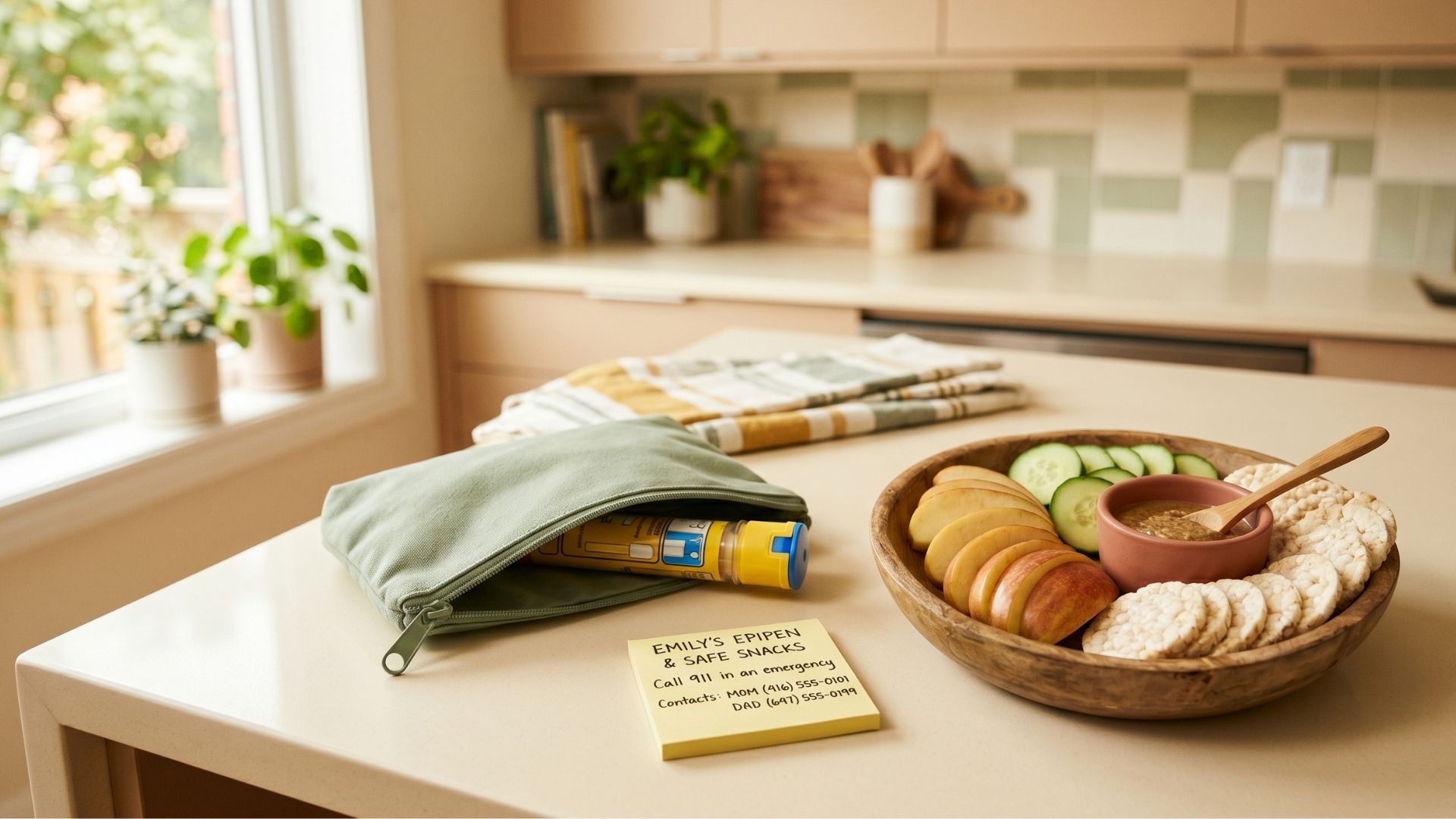
Food allergies do not have to make playdates harder; they just have to make them deliberate. A 10-second text before the playdate, a quick check of the snack you were planning to serve, and a simple plan for what to do if something goes wrong cover almost every situation. Here is how to host a kid with allergies, how to be a guest parent of one, and the small mistakes that create most of the trouble.
Why a quick allergy check matters more than you think
Roughly 1 in 13 kids in the US has a food allergy, and the number with a severe one is climbing. Most accidental exposures happen at someone else's house, often during a non-meal moment (a granola bar, a piece of birthday cake at a playdate that was not supposed to be a party, a snack the host did not realise contained the allergen).
The fix is a 10-second question in the playdate setup text: "Anything I should not feed her?" That single sentence prevents most playdate allergy incidents. The FARE guide on welcoming friends and family with allergies is the best one-page primer for parents who are hosting a kid with allergies for the first time.
If you are still working out the broader playdate logistics, our complete guide to playdates covers the bigger picture. This piece is the food-allergy version.
What to ask before the playdate (host script)
If you are hosting and you do not already know the kid, ask in the setup text. Direct, short, no fuss.
A script that works: "Quick check before tomorrow, are there any allergies or food things I should know about? Happy to send a photo of the snack if useful."
What you want to know: the allergen, the severity (mild reaction vs. anaphylaxis), whether the kid carries an EpiPen and where it lives in their bag, what you should do if they react. For a first playdate with a kid who has a serious allergy, ask the parent to walk you through the action plan.
Save the answer in your phone for repeat playdates. "Maya: peanut/tree nut allergy, EpiPen in the front pocket of her bag, call mom first then 911." Saves you the question every time.
Hosting a kid with a serious allergy: the 6 things that matter
If you are hosting a kid with a peanut, tree nut, dairy, egg, or other serious allergy for the first time, six small things cover most of the risk.
- Wash counters and snack surfaces before they arrive, especially if you have made anything with the allergen recently. Peanut residue, for instance, can persist on a kitchen counter for hours.
- Read labels. "May contain" matters; cross-contamination warnings on packaged foods are not optional. If a kid has a serious nut allergy, do not serve products with "may contain traces of nuts" on the label.
- Default to fruit, vegetables, and plain crackers if you are unsure. These are universally safe across most top-9 allergies.
- Keep the EpiPen in a known, easy-to-grab location. Not the bottom of a backpack, not zipped inside a coat. On the kitchen counter or in a clearly visible spot.
- Tell the kid where the EpiPen is and that they can ask for it at any time. Many allergic kids over age six can self-recognise the early signs of a reaction.
- Avoid "trying" new foods on the visiting kid. A playdate is not the moment to introduce a kid to a new snack their parents did not pre-clear.
If the visiting kid has a serious allergy and you are not confident you can manage it, it is fine to suggest a park playdate or a snack-free format. "Want to do a park meet at 10 with no food, then we go separately for lunch?" is a perfectly kind alternative.
The top-9 allergens and easy swaps
The FDA recognises nine major food allergens: milk, egg, peanut, tree nut, soy, wheat, fish, shellfish, and sesame. Most playdate snacks lean on the first six. Here is what to swap.
- Peanut/tree nut: sub sunflower seed butter (SunButter is a common brand) or tahini for any nut butter. Skip trail mix; check granola-bar labels.
- Dairy: oat milk, hummus, sliced avocado, dairy-free crackers. Many supermarket Oreos are surprisingly dairy-free; check the label.
- Egg: skip baked goods unless you know they are egg-free; default to fruit, vegetables, crackers, hummus.
- Wheat/gluten: rice crackers, corn tortilla chips with salsa, cheese cubes (if no dairy issue), fruit. Most gluten-free crackers are well-labelled.
- Soy: avoid edamame and soy-based crackers; most fruit, dairy, and meat snacks are fine.
- Sesame (the newest top-9 allergen, designated in 2023): skip hummus, tahini, and many seeded crackers (sesame is in more crackers than you would expect). Default to fruit and dairy snacks.
For the snack categories themselves, our 30 best playdate snacks article lists which everyday options are safe across the top-9 with the least friction.
Hidden allergens: where they show up that you do not expect
Some everyday playdate items contain allergens that are not obvious. The list to remember.
- Sesame is in many supermarket crackers, breadsticks, hamburger buns, and "everything" bagels. Even a plain-looking cracker may have sesame in the dough.
- Milk is in most baked goods, many crackers, and most chocolate. Dairy-free chocolate exists but is not the default.
- Egg is in pasta, many baked goods, mayonnaise, and some breaded products. Read labels.
- Soy is in many breads, crackers, granola bars, and chocolate as soy lecithin. Most kids with mild soy allergy tolerate lecithin; serious soy allergy means reading every label.
- Peanut and tree nut can be in granola bars, trail mix, energy balls, and many "healthy" packaged kids' snacks marketed as wholesome. Read every label.
- Wheat and gluten show up in soy sauce (sometimes), some sausages, many flavour seasonings, and most pre-made dips and sauces.
When in doubt, hand the kid the package and let their parent check (if visiting) or text the parent a photo (if hosting drop-off). Asking is never weird; finding out at the hospital is.
EpiPens at playdates: what hosts need to know
An EpiPen (or generic auto-injector) delivers a single dose of epinephrine to stop a severe allergic reaction. It is not optional for kids with diagnosed anaphylaxis; many carry two.
What hosts need to know about an EpiPen the visiting kid brings:
- Where it is. Ask the parent at drop-off or at the start of the playdate. Keep it somewhere visible, not zipped in a backpack.
- How to use it. The parent can walk you through it in 60 seconds; most are simple jab-in-the-thigh designs. Many EpiPens have visual instructions on the side.
- When to use it. If the kid shows signs of anaphylaxis (trouble breathing, throat tightness, full-body hives, vomiting plus another symptom, sudden weakness or pallor), use the EpiPen first, then call 911. Do not wait. The cost of using one when not needed is low; the cost of waiting too long is high.
- After use, the kid needs to go to the hospital. Even if they look better in 10 minutes, second-wave reactions are common. Call 911 every time you use one.
The AAP HealthyChildren primer on food allergies and anaphylaxis covers what an anaphylactic reaction looks like in kids and the action plan in more detail.
What guest parents should send (and what to leave at home)
If your kid has any food allergies, take the load off the host by sending what you need.
Send: a labelled lunchbox or container with safe snacks (their go-to crackers, a fruit pouch, a granola bar that is on their safe list). The EpiPen, in an easy-to-find spot, with a sticky note that says "EpiPen here." A short, written action plan: what allergen, what reactions look like, what to do, your phone number, your backup contact.
Tell the host upfront: "She has her own snacks, just please do not offer her anything else without checking with me first." Most hosts are quietly relieved that the load is off them; it lets them say yes to the playdate without being anxious.
What you can leave at home: anxiety. Most playdates with a kid who has allergies go totally fine when the parents are explicit and the food is contained. A parent who has had to manage allergies for years is usually a more careful host than one who has not, because they know the stakes.
When a reaction happens: the 4-step response
Most allergic reactions at playdates are mild (hives, mild swelling, an upset stomach). Some are not. Knowing the response in advance keeps the panic out of the moment.
- Recognise. Trouble breathing, throat tightness or hoarseness, full-body hives, vomiting plus another symptom, sudden pallor or weakness = anaphylaxis. One of these is enough.
- Use the EpiPen if anaphylaxis is suspected. Jab into the outer thigh, hold for 10 seconds (or per the device's instructions), remove. Note the time.
- Call 911 immediately after, even if the kid seems better. They need monitoring for the second-wave reaction.
- Call the parent. Tell them what happened and where the kid is being taken (the ambulance will likely take over from there).
For mild reactions (a few hives, mild swelling, no breathing issues), call the parent first; they will often have a Benadryl or antihistamine plan and may want to come pick up the kid early. Do not give any medication that the parent has not pre-cleared.
Talking to your own kid about a friend's allergy
If your kid is hosting a friend with a serious allergy for the first time, a short, matter-of-fact conversation helps. Not a lecture, not a scary speech, just a normalising chat.
What to say: "Maya has a peanut allergy, which means she can get really sick if she eats anything with nuts in it. So today no nut butter for snacks; we are doing apples and crackers instead. If you ever see her looking weird after eating, like having trouble breathing or being all red, come get me right away."
Older kids (age seven and up) can be brought into the action plan. "This is Maya's EpiPen. If anything goes wrong, you come find me; do not try to use it yourself." Including kids in the awareness is the same kind of small-stakes responsibility that builds the muscle to be a good friend to allergic kids long-term.
Frequently asked questions
Can a kid with a peanut allergy be in the same room as peanut butter?
For most peanut-allergic kids, yes; airborne peanut reactions are extremely rare. Contact reactions (touching a surface that had peanut on it then touching their mouth or eyes) are more common. Wash counters and hands before they arrive. For severely allergic kids, the parent will tell you what level of avoidance they want.
Should I cancel a playdate if my kid has a cold and the visiting kid has an allergy?
Not because of the cold. Cancel based on standard sick-kid rules (fever, vomiting, contagious symptoms). Allergy and contagious illness are separate questions; check both lists, manage each on its own.
What if I accidentally give an allergic kid the wrong food?
Tell the parent immediately, watch the kid for symptoms for the next two hours, and follow the action plan if anything appears. Do not panic, but do not minimise. Most accidental exposures result in mild reactions that pass within an hour. Have the EpiPen ready for the duration.
Are nut-free schools and playdates an overreaction?
For schools and group settings with kids who have severe airborne or contact reactions, no. For a one-on-one playdate, it is usually enough to remove the specific allergen for that visit. A blanket policy makes sense for an institution that cannot police every snack; for a single playdate, a targeted swap works.
How do I talk to a parent who is dismissive about their own kid's allergy?
Mostly stay out of it; how a family manages their own kid's allergy is their call. But you can ask direct questions for your own peace of mind: "What snacks are safe to offer? Do you carry an EpiPen with her?" If the answers worry you, you can choose to host a snack-free playdate (park meet, library, museum) and avoid the conflict entirely.
What about food allergies at birthday parties and bigger group playdates?
Higher stakes, more variables. For a bigger group, send out the snack and cake list ahead of time so allergic-kid parents can flag concerns. Have a labelled allergen-free option (a separate cupcake, a separate snack bowl) clearly set aside. Keep the EpiPen with you, not somewhere the kid would have to go look for it. Most parents of allergic kids will help you plan if you ask.