
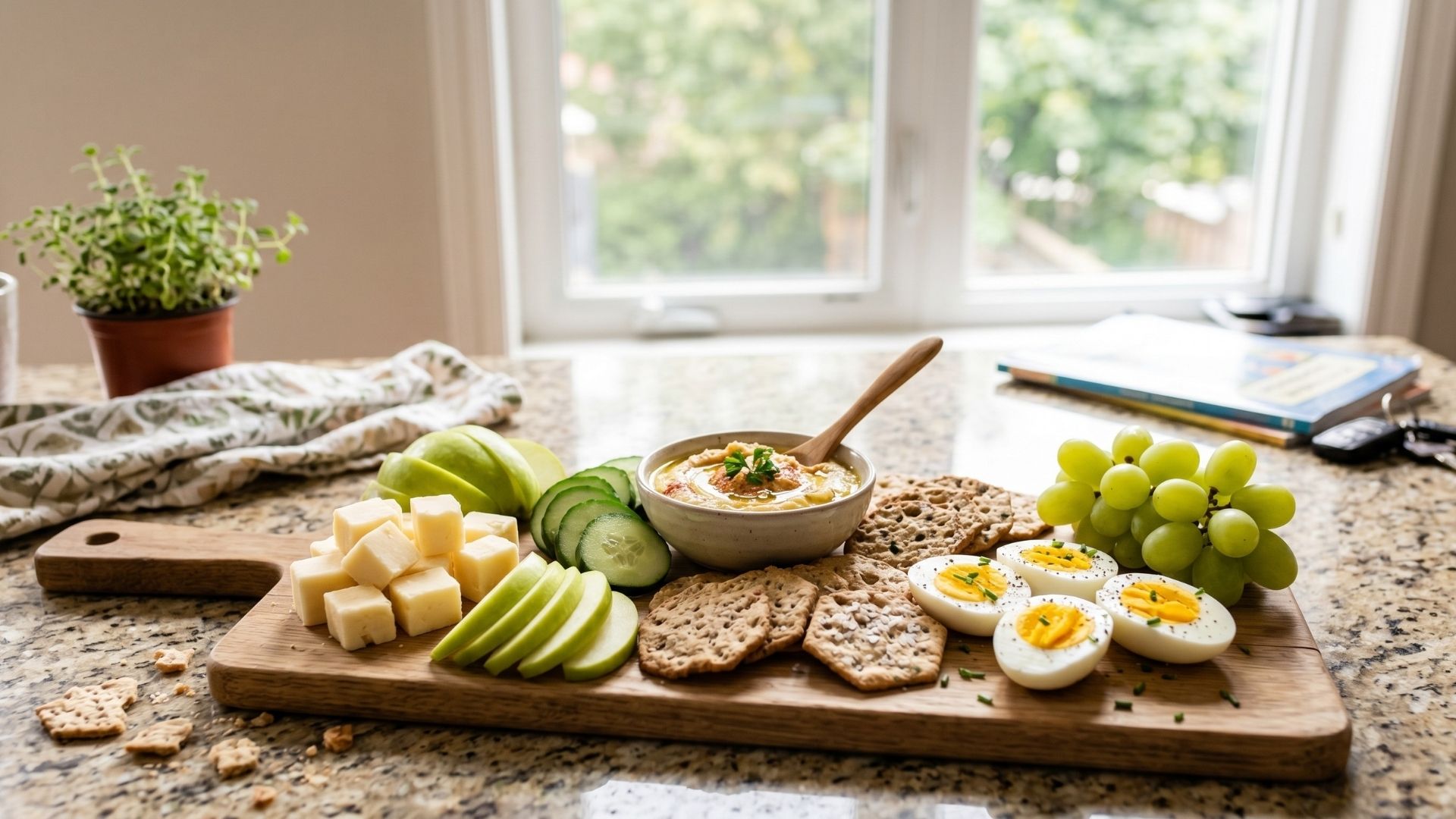
The best kid snacks are familiar, fast, and not too sugary. After 4pm, when blood sugar drops and homework starts, most parents need something on the table within 5 minutes. Here are 50 snacks sorted by how long they take to prep, organized so you can find one that fits the moment, plus the snack-stash setup that keeps the right ingredients in the house at all times.
What makes a kid snack actually work
Three things separate a snack that gets eaten from one that sits on the plate. Familiar (kids eat what they recognize). Fast (you do not want to be cooking for 20 minutes during the after-school window). And balanced enough that the sugar crash does not show up at dinner.
The general principle from USDA MyPlate guidance on healthy snacking holds across the snack categories below: aim for a fruit or vegetable plus a protein or fat at each snack. The combination keeps energy steady; the all-carbs snack produces the late-afternoon crash.
If you are looking for snacks specifically for playdates, our 30 best playdate snacks covers the social-context options. This piece is the everyday-snack menu.
20 snacks ready in 5 minutes
These are the after-school workhorses. Almost no prep, mostly assembly, ingredients you keep in the fridge or pantry.
- Apple slices with peanut butter (or sunflower seed butter for nut-free homes).
- Banana with a small spoon of nut butter, eaten straight off the spoon.
- Cheese cubes and grapes (halved for under-fours).
- Cucumber rounds with hummus.
- Carrot sticks with ranch or hummus.
- Crackers and a slice of cheese (the classic; still hard to beat).
- Greek yogurt with a drizzle of honey and a few berries.
- Cottage cheese with sliced peach or tinned mandarins.
- Sliced pear with a small piece of cheddar.
- Hard-boiled egg with a sprinkle of salt (boil a batch on Sunday; lasts a week).
- Tortilla rolled with cream cheese and turkey, sliced into pinwheels.
- Rice cake with avocado and a pinch of salt.
- Frozen blueberries straight from the freezer (a summer favorite).
- Edamame in the pod, microwaved 90 seconds.
- Tuna and crackers (single-serve tuna pouch on a plate of crackers).
- Avocado on toast with a squeeze of lemon.
- Banana with mini chocolate chips for the spoon.
- Apple sauce pouches with a small handful of crackers.
- Smoothie pouch with a handful of pretzels.
- Toast with butter and cinnamon sugar.
15 snacks ready in 10 minutes
A bit more effort. Worth it when the kid is hungrier than usual or you want a snack that doubles as light dinner support.
- Quesadilla (tortilla, cheese, microwave or pan; cut into wedges).
- Toast with sliced banana and peanut butter, toasted briefly to melt.
- Microwaved sweet potato with butter and cinnamon.
- Scrambled egg on toast.
- Mini bagel with cream cheese and cucumber.
- Snack plate (cheese cubes, crackers, sliced apple, carrot sticks, a few olives).
- Pita pocket with hummus, cucumber, and tomato.
- Toasted English muffin with melted cheese.
- Hard-boiled egg sliced over avocado on toast.
- Microwaved frozen edamame with a sprinkle of sea salt.
- Yogurt parfait (yogurt, granola, berries layered in a glass).
- Cottage cheese with diced peach and a drizzle of honey.
- Veggie cream cheese on a bagel with sliced cucumber.
- Toast soldiers with a soft-boiled egg for dipping.
- Pesto pasta (leftover pasta tossed with pesto and a sprinkle of parmesan).
10 make-ahead snacks for the week
These get prepped on a Sunday or whenever you have 30-60 minutes free. Stock the fridge with two or three of these and the after-school window stays calm for the whole week.
- Energy balls (oats, peanut butter, honey, mini chocolate chips; rolled, refrigerated; 30 minutes for a week's supply).
- Banana muffins (a Sunday batch yields snack for 4-5 days).
- Hard-boiled eggs by the dozen (lasts 7 days in the fridge).
- Hummus from scratch or from a tub, plus pre-cut veggie sticks in containers.
- Sliced fruit in a covered container (apples brushed with lemon juice keep for 3-4 days).
- Yogurt parfait jars (layer yogurt, granola, fruit; 5 jars on Sunday equals 5 weekday snacks).
- Granola bars (homemade with oats, nuts/seeds, honey, dried fruit; a tray makes 16-20 bars).
- Trail mix (mix nuts, seeds, dried fruit, chocolate chips; portion into snack bags).
- Bean dip with carrot and pepper sticks for dipping.
- Frozen smoothie packs (fruit and yogurt portioned into freezer bags; blend with milk in 30 seconds when needed).
5 specialty snacks for specific situations
Some moments need a slightly different snack. The five most useful.
- Hot-day snack: frozen yogurt-and-fruit pops (homemade in popsicle molds; 5 minutes prep, ready overnight).
- Long-car-ride snack: dry cereal (Cheerios, Chex) in a covered container; minimal mess, no fridge needed.
- Allergy-safe-everywhere snack: rice cakes with sunflower seed butter and banana slices (peanut-free, dairy-free, gluten-free).
- Sick-kid snack: applesauce, plain crackers, soft banana, and chicken broth (gentle on the stomach).
- Pre-sport snack: a banana and a small handful of trail mix 30-45 minutes before activity. Fast carbs plus a bit of fat for sustained energy.
Snacks by age (the cheat sheet)
Toddlers (1 to 3).
Soft, easy to chew, no choking hazards. Apple slices (peeled and thin), cheese cubes (small), banana, soft crackers, hummus, soft fruit, plain yogurt. Skip whole grapes, raw carrots, hard candy, popcorn, large chunks of raw apple, hot dogs in coins. Cut everything in half lengthways for under-3s.
Preschoolers (3 to 5).
Most of the snack list above works. Whole grapes are still a choking risk; halve them. Raw carrots are okay if cut into manageable sticks. Build snack-plate familiarity at this age (cheese, crackers, fruit, vegetable on a single plate) so the multi-component snack becomes normal.
School-age (6 to 9).
Self-service from a stocked fridge starts working. Set up a low shelf with pre-portioned snack containers; let them serve themselves. Heartier snacks work (quesadilla, toast with toppings, leftover pasta). Most of the 10-minute list lands at this age.
Tweens (10 to 12).
Tweens eat constantly. Stock larger portions; build their cooking confidence with simple stove-top items (scrambled eggs, quesadillas, ramen). Trail mix and energy balls travel well to school and after-school activities. Avoid restricting; tweens need fuel for growth and growing brains.
The snack-stash setup (so you never run out)
The reason most snack-time stress happens is not lack of ideas; it is empty fridge or pantry at 4pm. The snack-stash is a deliberate weekly setup.
- Fridge essentials: cheese cubes, hummus, yogurt, eggs, sliced cucumber, baby carrots, fruit (apples, grapes, berries), tortillas, deli meat or smoked salmon, milk for smoothies.
- Freezer essentials: frozen berries, frozen edamame, frozen banana chunks for smoothies, a stash of homemade muffins or banana bread.
- Pantry essentials: crackers (a few varieties), bread, peanut butter or sunflower seed butter, pretzels, popcorn kernels, granola, oats, honey, dried fruit, applesauce pouches, a few snack bars (homemade or store-bought backup).
- Replace the snack-stash every Sunday. Make the shopping list around it. The whole snack-supply takes 15 minutes of weekly planning and a 30-minute supermarket shop.
If allergies are part of your family or your kid's friend group, the guide to playdates and food allergies covers the safe snacks across the top-9 allergens.
Snacks to skip (and what to swap in)
Three snack categories that are easy to default to and produce more friction than they give back.
- Juice boxes. Quick sugar spike followed by a crash 60 minutes later. Swap for water, milk, or a homemade smoothie.
- Highly processed snack bars marketed at kids. Often more sugar than a cookie. Swap for homemade granola bars, a piece of fruit with cheese, or trail mix.
- Crackers as a meal replacement. Crackers are fine as a small component; not as the whole snack on a regularly empty stomach. Pair with cheese, hummus, or fruit so the snack is more than refined carbs.
What is fine in moderation. Cookies, ice cream, chips, sweet treats. The goal is not zero treats; the goal is treats as a sometimes thing, not the daily after-school default. Most kids do best with treats integrated into the week (cookies in the lunchbox once or twice, ice cream after a Saturday outing) rather than restricted entirely.
Frequently asked questions
How many snacks per day is right for kids?
Most kids ages 2 to 12 do best with two snacks a day plus three meals. Toddlers may need three snacks because their stomachs are smaller. Active older kids and tweens may need three or four. The cue is hunger; if your kid is asking, the snack is fine. If they are eating from boredom rather than hunger, redirect to an activity first.
What should an after-school snack look like?
Combine a fruit or vegetable with a protein or fat. The carbs give immediate energy; the protein and fat keep them full until dinner. Apple with peanut butter; cheese and crackers; cucumber with hummus and a hard-boiled egg. Avoid all-sugar snacks; they produce the 5pm meltdown.
Are store-bought snacks ever the right answer?
Yes, often. The all-homemade pressure is unrealistic for most working-parent families. Decent store-bought options: applesauce pouches (no added sugar), single-serve hummus and crackers, cheese sticks, plain yogurt, pre-cut veggie packs, freeze-dried fruit, plain rice cakes. The trick is reading labels for added sugar and skipping the worst-offender items (juice boxes, sugary cereals branded as snacks).
What if my kid only wants snacks and skips meals?
Tighten the snack window. Two snacks at fixed times (mid-morning, mid-afternoon) instead of grazing all day. Stop snacks 90 minutes before dinner. The kid arrives at dinner hungry and eats more of the meal. Constant grazing produces a kid who is never hungry enough to eat a real meal but also never satisfied; the schedule fix is usually the answer.
How do I deal with snack pressure from other families with different rules?
Their house, their rules at their house; your house, your rules at yours. If your kid comes home from a friend's house full of sugar, accept it as part of the social variety. If it is happening daily and disrupting your kid's eating pattern, talk to the parent about a small adjustment for visits at their house.
What about choking hazards for under-fours?
The big ones to avoid or modify: whole grapes (cut in quarters lengthways), hot dogs (slice lengthways then chop), nuts and seeds (avoid until age 4), popcorn (avoid until age 4), hard candy, large chunks of raw apple or carrot, marshmallows, chunks of meat or cheese larger than the kid's pinky tip. Stay nearby during snack time for under-3s.